
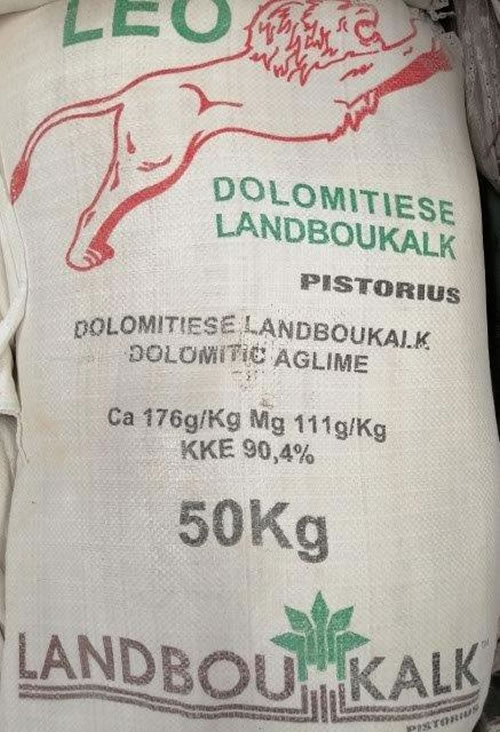
Agricultural lime is a natural soil conditioner made from pulverized limestone or chalk used to raise soil pH, reduce acidity, and supply calcium or magnesium. The two main types are calcitic lime (calcium carbonate) and dolomitic lime (calcium and magnesium carbonate)
Main Benefits. pH Correction: Neutralizes acidic soils to an optimal growing range (pH 6 to 7). Nutrient Availability: Unlocks locked-up macro-nutrients like phosphorus and improves fertilizer efficiency.Soil Structure: Enhances water infiltration, aeration, and root penetration, especially in heavy clay types.
Types and Application
Calcitic Lime: Best for soils requiring only calcium supplementation. Dolomitic Lime: Ideal when soils lack both calcium and magnesium.
Agricultural lime application requires 100 to 400 grams per square meter and is typically repeated every 2 to 3 years, depending on your soil test results.
Application Rate per
- Sandy soils: Use about 100 grams per m2 (mild adjustment needed).
- Loam soils: Use about 150 to 200 grams per m2
- Clay soils: Use 300 to 400 grams m2 (heavy acidity and dense structure).
- Note: Split heavy clay applications into two or three smaller doses spaced a few weeks apart to avoid shocking the soil





Reviews
There are no reviews yet.